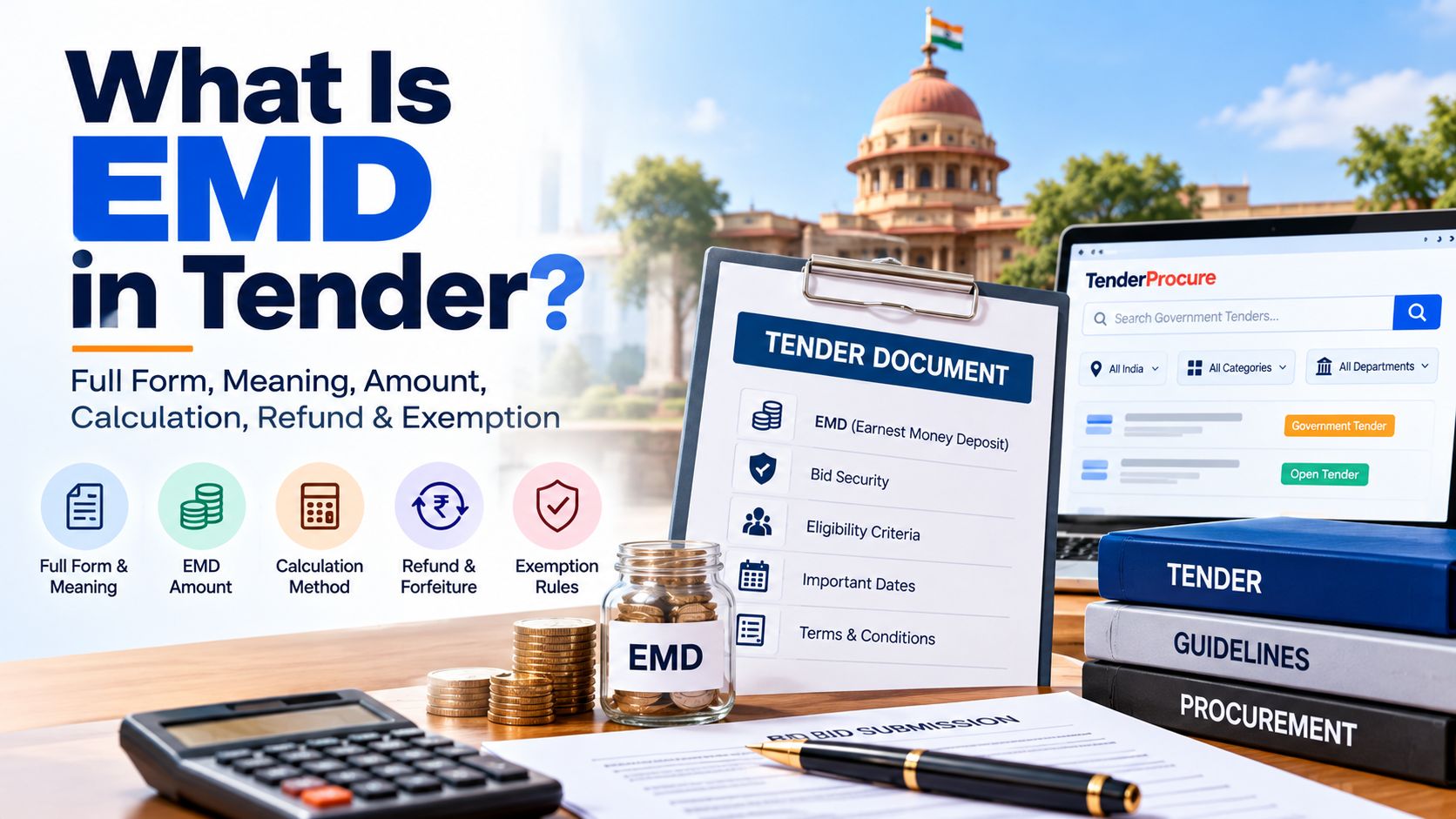
What is EMD in tender? EMD stands for Earnest Money Deposit. It is a form of bid security that may be required from bidders when submitting a tender. The EMD amount and applicable conditions are specified by the tendering authority in the tender documents.
In simple terms, EMD in tender means a security provided by a bidder to demonstrate serious intent to participate in the bidding process. It is generally refundable subject to the tender conditions, but it may be forfeited in certain circumstances specified in the tender.
For businesses participating in government tenders, understanding EMD is important because an incorrect amount, payment method, validity period, or exemption claim can affect the bid.
If you're new to the process, start by understanding what a tender is and how the tender process works before learning about specific requirements such as EMD.
What Is EMD in Tender?
EMD, or Earnest Money Deposit, is a form of bid security submitted by a bidder when required under the conditions of a tender.
It provides the tendering authority with a degree of assurance that the bidder is serious about the offer and intends to comply with the applicable bidding conditions.
A simple way to understand EMD is:
Tender Published → Bidder Checks Eligibility → EMD Requirement Checked → EMD or Valid Exemption Submitted → Bid Submitted
EMD should not be confused with the cost of participating in a tender. Subject to the tender conditions, it is generally a refundable security associated with the bid.
The exact requirement can vary from one tender to another, so bidders should always check the latest tender documents and applicable corrigenda before submitting a bid.
What Is the Full Form of EMD?
The full form of EMD is Earnest Money Deposit.
In the context of tendering and procurement, EMD refers to a monetary or permitted security requirement associated with a bid.
You may also encounter the term bid security in procurement documents. The terminology and permitted form can depend on the tender and applicable procurement framework.
EMD is different from a tender fee and performance security, which serve different purposes in the procurement process.
What Is the Meaning of EMD in Tender?
The meaning of EMD in tender can be understood as a security mechanism intended to support the seriousness and commitment of a bidder during the bidding process.
Suppose a government department invites bids for supplying equipment. Several businesses submit their offers.
If bidders were able to submit offers and withdraw them without consequence during the applicable bid-validity period, it could disrupt the procurement process.
An EMD or other prescribed bid security can help address this risk.
For a bidder, the important point is:
EMD is not simply an additional tender expense. It is a bid-related security governed by the conditions stated in the tender.
Why Is EMD Required in a Tender?
Tendering authorities may receive bids from multiple suppliers, manufacturers, contractors, or service providers.
EMD can help demonstrate that bidders have a genuine intention to participate and comply with the terms of their submitted bid.
Depending on the tender conditions, EMD may also protect the buyer in situations such as:
- Withdrawal of a bid during its validity period
- Failure of a successful bidder to accept the award as required
- Failure to furnish required performance security
- Other specified breaches of bidding conditions
For businesses, EMD should therefore be checked early when evaluating an opportunity.
Before deciding to bid, confirm:
How much EMD is required?
How must it be submitted?
What is its required validity?
Do you qualify for an exemption?
Under what conditions can it be refunded or forfeited?
What Is EMD Amount in Tender?
The EMD amount in a tender is the amount of bid security specified by the tendering authority for that particular procurement.
There is no single EMD amount that applies to every tender.
Depending on the procurement, the tender may specify:
- A fixed EMD amount
- An amount calculated according to the stated tender value
- A prescribed bid-security requirement
- An exemption or alternative where applicable
The required amount should be clearly checked in the Notice Inviting Tender (NIT), tender summary, bid document, or EMD/bid-security conditions.
Example of an EMD Amount
Suppose a tender has an estimated value of ₹50 lakh and, for illustration, its tender document specifically states that the EMD is 2% of the estimated value.
The calculation would be:
₹50,00,000 × 2% = ₹1,00,000
In this example, the EMD amount would be ₹1 lakh.
However, this does not mean that every tender requires EMD at 2%.
Always use the amount or calculation method specified in the actual tender documents.
How Is EMD Calculated?
There is no universal EMD calculation that bidders should apply to every tender.
If a tender specifies a fixed amount, there is nothing for the bidder to calculate.
For example:
Tender Value: ₹1 crore
EMD specified by authority: ₹2 lakh
The bidder should follow the stated ₹2 lakh requirement.
If the tender specifically defines EMD as a percentage, the calculation can be made according to that stated percentage.
For example:
Estimated Value: ₹25 lakh
EMD specified: 2%
Calculation:
₹25,00,000 × 2% = ₹50,000
Therefore:
Never assume an EMD percentage based on another tender. Check the specific tender document every time.
Where Can You Find the EMD Amount?
EMD information can commonly be found in the:
- Tender notice
- Notice Inviting Tender (NIT)
- Tender summary
- Bid document
- Fee/EMD section
- Bid-security conditions
Some e-procurement systems may also display the EMD amount in the tender summary.
However, bidders should still review the complete tender documents.
Also check whether a corrigendum has changed the original EMD amount, submission date, payment method, validity requirement, or exemption conditions.
How Is EMD Paid?
The accepted EMD payment or security method depends on the tender.
Depending on the procurement and tender conditions, permitted forms may include:
- Online payment
- Demand Draft (DD)
- Bank Guarantee (BG)
- Fixed Deposit Receipt (FDR)
- Banker's cheque
- Other permitted bid-security instruments
The fact that one tender accepts a particular method does not mean another tender will accept the same method.
Before arranging EMD, verify:
Amount → Accepted Mode → Beneficiary → Format → Validity → Submission Method → Deadline
If a particular format is prescribed for a bank guarantee or another instrument, follow that format carefully.
Is EMD Refundable?
EMD is generally refundable subject to the applicable tender conditions.
The refund or release procedure can differ depending on whether the bidder is successful or unsuccessful.
EMD Refund for Unsuccessful Bidders
For unsuccessful bidders, EMD is generally released or returned according to the process and timeline specified in the tender conditions.
The exact timing can vary between procurements.
EMD for the Successful Bidder
For the successful bidder, release or adjustment of EMD may be connected with post-award requirements.
For example, the selected bidder may first need to:
- Accept the award
- Furnish required performance security
- Complete specified contractual formalities
The actual procedure should always be verified from the tender documents.
Does EMD Earn Interest?
Tender conditions commonly provide for the return of EMD without interest.
However, bidders should rely on the terms of the specific procurement rather than assuming the same condition applies universally.
When Can EMD Be Forfeited?
EMD forfeiture means the bidder loses the EMD instead of receiving it back.
The circumstances in which this can happen should be stated in the tender documents.
Common examples may include:
Withdrawal of the Bid
If a bidder withdraws or improperly modifies the bid during the specified bid-validity period, the EMD may be forfeited where the tender conditions provide for it.
Successful Bidder Does Not Accept the Award
If the successful bidder refuses or fails to proceed according to the award conditions, EMD may be forfeited.
Failure to Furnish Performance Security
A selected bidder may be required to furnish performance security within a specified period.
Failure to meet this requirement can result in consequences stated in the tender, which may include forfeiture of EMD.
Other Specified Breaches
Tender documents may specify additional situations in which EMD or bid security can be forfeited.
For this reason, bidders should read the entire EMD/bid-security clause, not only the amount.
What Is EMD Exemption?
An EMD exemption means an eligible bidder may not be required to furnish the standard EMD, subject to the applicable procurement rules and tender conditions.
Certain procurements may provide exemptions to specified categories of eligible bidders.
However:
Do not assume that a registration or business category automatically gives you an EMD exemption in every tender.
Before claiming an exemption, check:
- Does this tender permit an EMD exemption?
- Which bidder categories are eligible?
- Does the exemption apply to the goods or services being offered?
- What supporting documents are required?
- Are the registrations/documents currently valid?
- How must the exemption be claimed during bid submission?
If an exemption is claimed incorrectly or without the required proof, it can affect the bid depending on the tender conditions.
EMD Exemption for Micro and Small Enterprises
Eligible Micro and Small Enterprises (MSEs) may receive EMD or bid-security related benefits in applicable government procurements, subject to the relevant rules and tender-specific conditions.
The applicability can depend on factors such as:
- Type of procurement
- Bidder category
- Registration status
- Goods or services being offered
- Tender-specific exemption requirements
- Supporting documentation
For example, a tender may specify particular eligibility conditions for manufacturers or service providers claiming an exemption.
Therefore, having an MSME/MSE-related registration should not be treated as an automatic exemption for every tender.
Always check the exemption clause of the specific tender.
What Documents May Be Required for EMD Exemption?
The required documents vary depending on the tender and exemption category.
A tender may ask bidders to provide valid registration certificates or other supporting evidence proving their eligibility for the claimed exemption.
A practical process is:
Read Exemption Clause → Confirm Eligibility → Check Required Documents → Verify Validity → Submit as Instructed
If the tender conditions are unclear, use the official clarification or pre-bid mechanism provided by the tendering authority.
EMD vs Tender Fee: What's the Difference?
EMD and tender fee are different requirements.
EMDTender FeeForm of bid securityFee associated with the tender/process where applicableGenerally refundable subject to tender conditionsGenerally non-refundable unless otherwise specifiedHelps support seriousness of the bidServes an administrative/procurement purposeMay have applicable exemptionsExemption conditions can differ
A tender may contain both requirements, only one, or neither depending on the procurement.
Always check them separately.
EMD vs Performance Security
EMD and performance security apply at different stages and serve different purposes.
EMD / Bid SecurityPerformance SecurityPrimarily related to the bidding stagePrimarily related to the post-award/contract stageSubmitted by bidders when requiredGenerally furnished by the successful bidderHelps secure seriousness of the bidHelps secure performance of contractual obligationsReleased according to tender/bid conditionsReleased according to contractual/performance conditions
A simple way to remember it:
EMD relates to your bid. Performance security relates to performance after the contract is awarded.
Example of EMD in a Government Tender
Suppose a government department publishes a tender for electrical equipment.
The tender specifies:
Estimated Tender Value: ₹1 crore
EMD Amount: ₹2 lakh
Bid Submission Deadline: 30 November
EMD Method: As specified in the tender documents
A supplier wants to participate.
Before submitting its bid, the supplier should:
- Confirm the ₹2 lakh EMD requirement.
- Check the permitted payment or security method.
- Verify the required validity.
- Determine whether it qualifies for an exemption.
- Prepare the EMD instrument or required exemption documents.
- Check for any corrigenda.
- Complete the requirement before the specified deadline.
If the supplier is unsuccessful and has complied with the applicable tender conditions, the EMD would generally be processed for release or refund according to those conditions.
If the supplier wins, the tender documents will determine what happens to the EMD after the required post-award formalities are completed.
Common EMD Mistakes Bidders Should Avoid
Even when a business is otherwise eligible for a tender, mistakes relating to EMD can create compliance problems.
Paying the Wrong EMD Amount
Always verify the latest tender documents and corrigenda before making payment or arranging security.
Using an Unaccepted Payment Method
Use only the modes specifically permitted in the tender.
Entering Incorrect Beneficiary Details
Verify the authority name and payment/security details carefully.
Using an Incorrect Bank Guarantee Format
If a prescribed BG format is provided, follow it exactly as required.
Insufficient Validity
Make sure the security instrument satisfies any validity requirements stated in the tender.
Assuming Automatic EMD Exemption
Verify that your bidder category and registration qualify under the specific tender.
Submitting Invalid Exemption Documents
Check document type, validity, scope, and any other stated requirements.
Ignoring Corrigenda
Tender conditions can change after publication. Always check the latest official updates before submitting the bid.
EMD Checklist Before Submitting a Tender
Before completing your bid, confirm:
- What is the exact EMD amount?
- Is the amount fixed or calculated according to a stated method?
- Which EMD modes are accepted?
- What is the submission deadline?
- Is a prescribed format required?
- Is there a validity requirement?
- Do I qualify for an EMD exemption?
- Have I provided the correct exemption documents?
- Are the beneficiary/payment details correct?
- Has a corrigendum changed any EMD requirement?
- Do I understand the refund conditions?
- Do I understand the forfeiture conditions?
This simple check can help prevent avoidable EMD-related errors during tender submission.
Frequently Asked Questions About EMD
What is EMD?
In tendering, EMD is Earnest Money Deposit, a form of bid security that may be required from bidders as part of the tender submission process.
What is EMD in tender?
EMD in tender means Earnest Money Deposit. It is a bid-related security intended to demonstrate the bidder's seriousness and is governed by the conditions of the specific tender.
What is the full form of EMD?
The EMD full form is Earnest Money Deposit. In procurement, it commonly refers to the bid security required under applicable tender conditions.
What is the meaning of EMD?
In the context of tenders, EMD means a security associated with a bidder's offer. It helps protect the procurement process against specified situations such as withdrawal of a bid during its validity period.
What is EMD amount?
The EMD amount is the amount of bid security required for a particular tender. It may be a fixed amount or calculated using a method specified by the tendering authority.
What is EMD amount in tender?
The EMD amount in tender is the specific bid-security amount stated in the tender documents. There is no single amount or percentage applicable to every tender.
Is EMD refundable?
EMD is generally refundable subject to the conditions of the tender. Refund or release procedures can differ for successful and unsuccessful bidders.
How is EMD calculated?
EMD should be calculated only according to the method specified in the tender. If a fixed amount is provided, bidders should follow that amount rather than applying their own percentage.
Can EMD be forfeited?
Yes. EMD can be forfeited under circumstances specified in the tender, such as certain bid withdrawals or failure by a successful bidder to complete required post-award formalities.
Is EMD compulsory for every tender?
No. EMD requirements vary between tenders. Some may require EMD, some may provide exemptions to eligible bidders, and others may have different bid-security provisions.
Are MSMEs exempt from EMD?
Eligible Micro and Small Enterprises may receive EMD/bid-security benefits in applicable procurements, subject to the relevant procurement rules and tender conditions. Eligibility should be checked for each tender rather than assumed.
Find Relevant Government Tenders with TenderProcure
Understanding EMD helps you evaluate a tender correctly, but the first step is finding opportunities relevant to your business.
TenderProcure helps businesses discover and track government tender opportunities using search, advanced filters, alerts, and tender intelligence.
Search tenders by keyword, authority, location, category, and other relevant criteria to focus on opportunities that match your business.
Continue Learning About Tenders
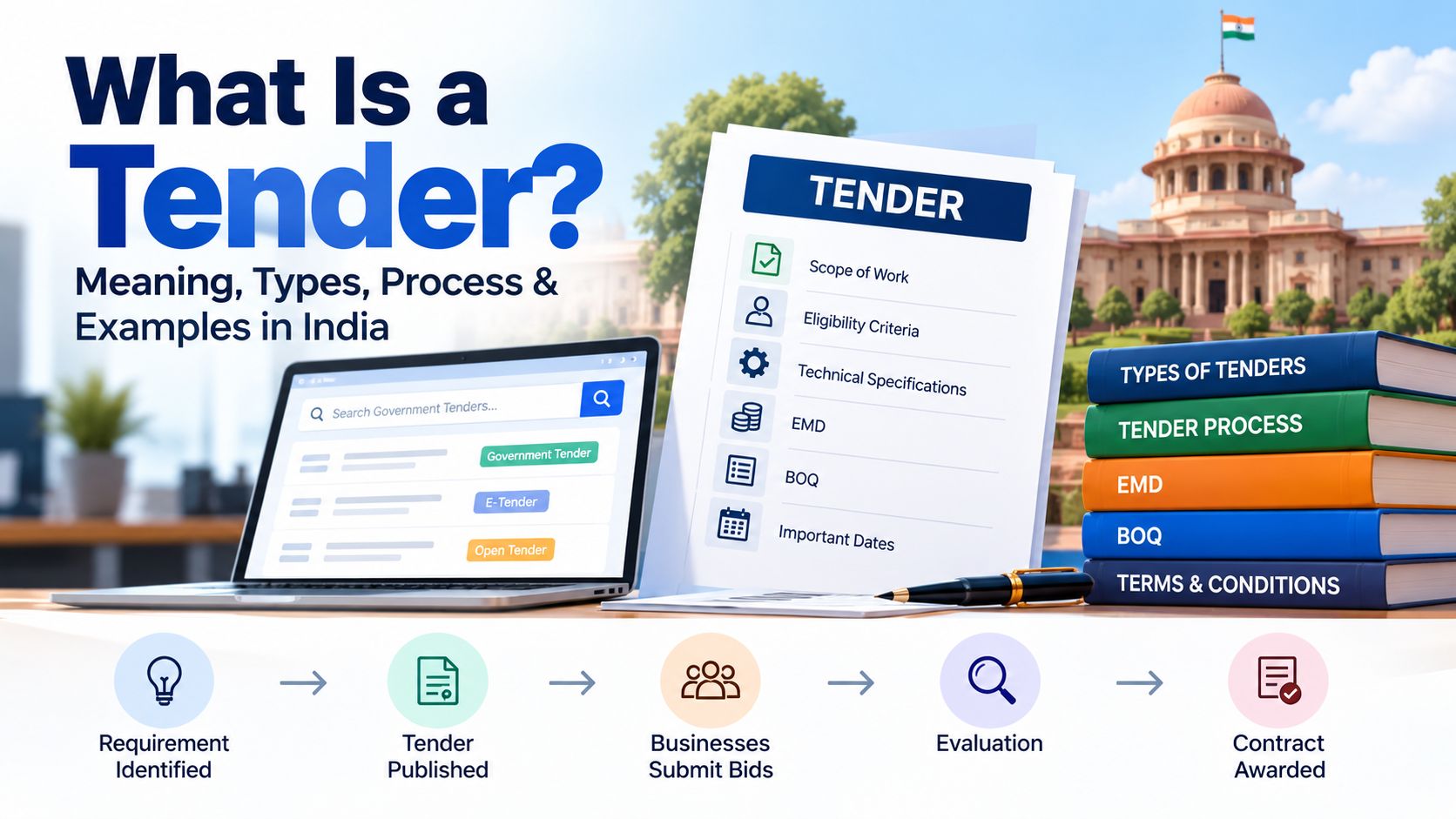
If you are new to tendering, read What Is a Tender? Meaning, Types, Process & Examples in India to understand how the complete tender process works.
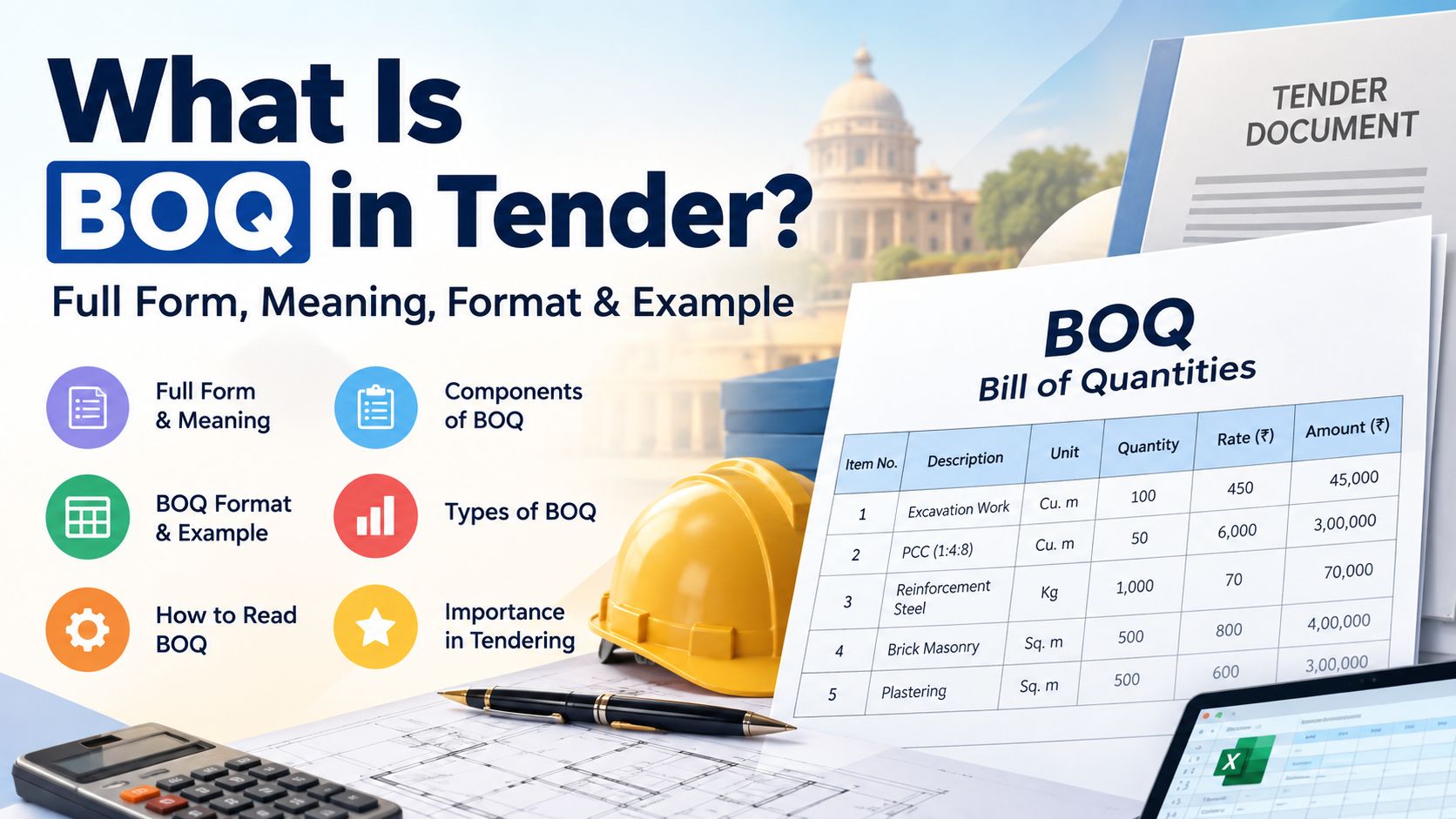
Next, explore What Is BOQ in Tender? Meaning, Format & Example to understand another important part of tender documentation and financial bidding.